
Why Do I Suddenly Feel Scared for No Reason?
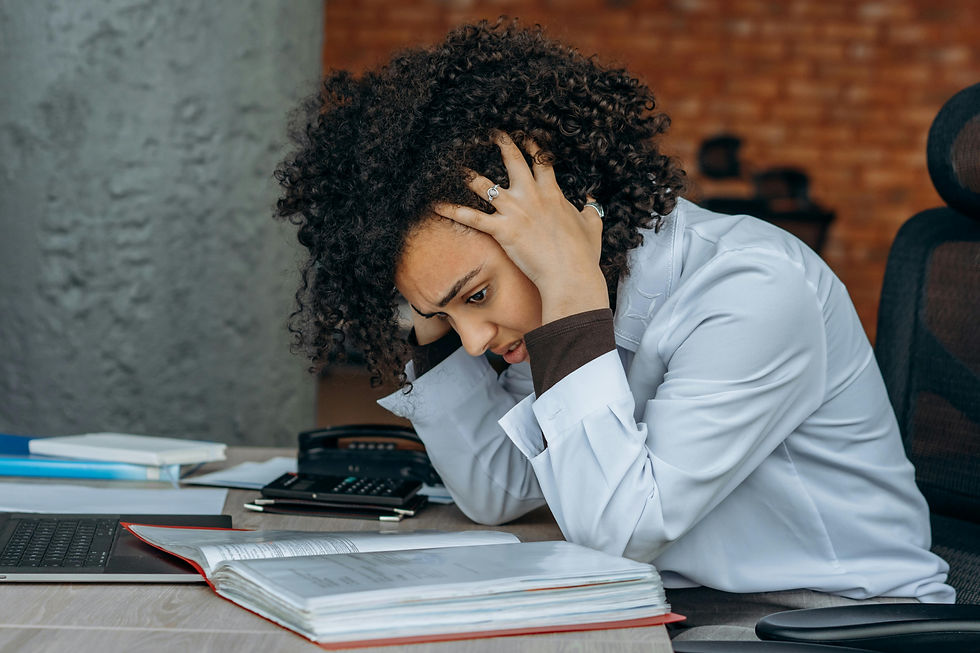
You're sitting in an important meeting. You've prepared for this presentation for weeks. You know your material cold. You're midway through explaining the quarterly projections when suddenly...your heart starts pounding like you've just run a marathon.
Your chest gets tight. Your hands start to shake so badly you have to grip the edge of the table. This wave of pure terror washes over you, and you're certain everyone can see it. Your mind starts screaming, "What if I pass out right here? What if I can't breathe? What if I have to run out of this room in front of everyone?"
You look around at your colleagues' faces and think, "What is wrong with me? Why can't I just be normal and calm like everyone else seems to be?" You're supposed to be the competent one. The one who has it all figured out by now. The one people depend on.
All you want in this moment is to feel normal. To breathe without thinking about breathing. To get through one single day without this terror hijacking your body. To stop feeling like you're constantly on the edge of falling apart while everyone else seems to be handling life just fine.
If this sounds familiar—if you've ever felt that sudden, overwhelming fear crash over you and wonder, "Why do I suddenly feel scared for no reason?"—I want you to know something right now.
You're definitely not alone.
That terrifying feeling of sudden fear that seems to come from nowhere? It has a name, it has a reason, and most importantly—it can be transformed.
Why Do I Suddenly Feel Scared for No Reason?
Your nervous system is responding to something, but it's not what's happening right now in this moment. It's responding to patterns, memories, and protective mechanisms that were created earlier in your life.
Your mind has two main jobs: to keep you safe, and to give you what you want. When those two conflict, your mind will always choose safety first. Always. It takes that first job very, very seriously, and it can find threat in all manner of things that aren't actually dangerous.
Your subconscious mind learned that if it stays hypervigilant, if it worries about everything that could go wrong, it can keep bad things from happening. It thought it was helping you.
Think about it this way. Your nervous system is like a smoke alarm. A good smoke alarm should go off when there's actual fire. But what if your smoke alarm was so sensitive that it went off every time you made toast? That's what's happening with sudden fear. Your internal alarm system got calibrated to be extra sensitive, probably when you were younger and actually needed that protection.
Now? You're safe, but your body hasn't gotten the memo yet.
That moment when you're sitting in a meeting and terror strikes for "no reason"? Your body might be responding to something as simple as:
The tone of someone's voice that unconsciously reminds you of a past experience
A feeling of being evaluated or judged
The pressure of needing to perform or be "on"
Physical sensations (like your heart rate increasing slightly) that your nervous system interprets as danger
The fear isn't coming from nowhere. It's coming from a part of you that's still trying to protect you using outdated information.
What Are Five Warning Signs of Anxiety?
Your body is incredibly intelligent. It sends you signals long before anxiety reaches that overwhelming, can't-breathe level. The problem is, most of us have learned to push through these signals until we literally can't anymore.
Here are five warning signs your body is trying to get your attention.
1. Your sleep becomes disrupted. You're exhausted but you can't fall asleep. Or you fall asleep fine but wake up at 3 AM with your mind racing, replaying conversations or worrying about tomorrow. You might wake up already feeling anxious, like your nervous system never actually rested overnight.
2. Your body feels tense and tight. Your shoulders are up by your ears. Your jaw is clenched. You notice your fists are tight or your stomach is constantly in knots. You might not even realize how much tension you're holding until someone points out that you look stressed—or until you finally lie down and feel how exhausted your body actually is.
3. You feel restless and can't focus. You sit down to work on something important, but you can't concentrate. Your mind jumps from one thing to another. You find yourself scrolling through your phone for three hours instead of doing what you meant to do, then beating yourself up for "wasting time" again. You feel simultaneously wired and exhausted.
4. You become irritable over small things. That comment your partner made that normally wouldn't bother you suddenly feels like a personal attack. You snap at your kids. You feel annoyed by noises, interruptions, or people needing things from you. You're not actually angry at them. You're overwhelmed, and irritability is how it's showing up.
5. You start avoiding things. You cancel plans at the last minute. You avoid that phone call you need to make. You find reasons not to go to that event, not to have that conversation, not to do that thing that feels hard. Avoidance feels like relief in the moment, but it actually reinforces the anxiety, teaching your nervous system that those situations really are dangerous.
The tricky thing about anxiety is that by the time you notice these signs, they've often been building for a while. Your body has been whispering, then talking, then shouting, and sudden fear is often the emergency alarm that finally gets your attention.
Why Do I Randomly Get a Feeling of Fear?
You're going about your day, everything seems fine, and then—BAM. Terror. Your heart races. You feel like you can't breathe. You're certain something terrible is about to happen.
"Random" fear isn't actually random at all.
Your subconscious mind is processing about 95% of everything you experience. It's picking up on subtle cues, patterns, and triggers that your conscious mind doesn't even register. So while it feels random to you, your nervous system is actually responding to something, but you just can't consciously identify what.
Maybe you walked past someone wearing the same cologne your critical boss wears. Maybe you're approaching a deadline and your body remembers what happened last time you felt this kind of pressure. Maybe you had a dream you don't even remember that activated old fears.
Your nervous system is trying to protect you from something it perceives as a threat, even when there's no actual danger in front of you.
Here's what I discovered after years of battling this myself. That "random" feeling of fear often happens when there's a disconnect between what your life looks like on the outside and what you're actually feeling on the inside.
You look successful on paper. You've got the career, the relationship, the life that's supposed to make you happy. But inside, you're exhausted from pretending everything is fine. You're overwhelmed by expectations—from others, from yourself. You're living in a way that doesn't actually align with who you really are or what you really need.
That fear? It's your body's way of saying, "Something here isn't working. Pay attention."
What Causes Sudden Unexplained Anxiety?
Let's talk about what's actually creating those terrifying moments when anxiety seems to strike from nowhere.
Your mind is doing exactly what it was designed to do. Here's something that changes everything once you understand it. Your mind has two main jobs. The first job is to keep you safe. The second job is to give you what you want.
When those two jobs conflict? Your mind will default to safety every single time. It takes that first job very, very seriously. It can find threat in all manner of things—a difficult conversation, someone's disapproval, putting yourself out there, making a change, being visible, feeling vulnerable.
So when you were younger, your brain created certain responses to keep you safe. Maybe you learned that staying small meant avoiding criticism. Maybe you learned that hypervigilance meant you could anticipate problems before they happened. Maybe you learned that your emotions weren't safe to express, so you had to keep everything locked down tight.
These patterns got wired into your nervous system as automatic responses. Now, decades later, your body is still running those same protective programs, even though the original situations that required them are long gone. Your mind is still prioritizing safety over what you actually want, because that's how it was programmed to work.
You're living in a constant state of low-level stress. Think about your average day. You wake up already thinking about everything you need to do. You rush through your morning. You spend your day putting out fires, meeting other people's needs, responding to demands. You collapse at night, exhausted, only to do it all again tomorrow.
Your nervous system never gets a break. It's like keeping your foot on the gas pedal 24/7. Eventually, the engine is going to overheat. Sudden anxiety is often that moment when your system just can't take any more.
Your body is processing something your mind hasn't caught up to yet. Sometimes anxiety shows up before you consciously realize something needs to change.
Your body knew before your mind did that:
This relationship isn't working anymore
This job is draining your life force
You're ignoring your own needs to please everyone else
You're living someone else's version of success instead of your own
The anxiety isn't the problem. It's the messenger trying to get your attention about the actual problem.
You're not honoring your sensitive nervous system. If you're someone who feels things deeply, who picks up on other people's emotions, who needs more downtime than the people around you, you have a sensitive nervous system, which is actually a gift. The problem is, you're probably trying to function like someone who doesn't have that sensitivity.
You're pushing yourself to do all the things, be all the things, handle all the things, without the recovery time and boundaries your nervous system actually requires. The sudden anxiety is your body saying, "I can't keep doing this. Something has to change."
Anxiety Every Day for No Reason
Maybe for you, it's not sudden episodes. It's a constant companion. You wake up with it. You go to bed with it. It's there in the background of everything you do, this low hum of dread that never quite goes away.
You're exhausted from constantly swimming upstream against your own nervous system.
You've probably tried everything to manage it. Breathing exercises. Meditation apps. Talk therapy sessions where you talk in circles about the same worries. Some things help temporarily, but nothing creates the lasting peace you're desperate for.
Most approaches to anxiety focus on managing symptoms after they've already been activated. They teach you how to calm down once you're already anxious. And yes, those tools can be helpful in the moment.
Daily anxiety isn't who you are. It's not your personality. It's not something you're stuck with forever. It's a pattern your nervous system learned, and what was learned can be unlearned.
Your family might joke about it. "Oh, that's just her, she worries about everything." You've accepted it as part of your identity. But constant anxiety isn't a character trait. It's information about patterns that were created earlier in your life, patterns that made sense at the time but don't serve you anymore.
When anxiety is your daily reality, it's because your nervous system is stuck in survival mode. Your brain perceives threat constantly, so it keeps you in a state of high alert.
Remember...Your mind's first job is to keep you safe, and it takes that job incredibly seriously. It can identify threat in situations that aren't actually dangerous, like having a vulnerable conversation, taking a risk on something you want, or being visible in your truth.
So even though you might consciously want to relax, to feel calm, to pursue your dreams, your subconscious mind is busy scanning for danger and pulling the emergency brake. You want one thing, but your mind's safety protocols are overriding what you want.
The problem isn't that you're not strong enough or disciplined enough to "just relax." The problem is that you're trying to use conscious techniques to change subconscious programming.
It's like trying to rewrite the operating system on your computer by changing the screensaver. You're working at the wrong level.
Why Do I Feel Sad and Scared for No Reason?
When fear and sadness show up together, wrapped around each other like an uncomfortable blanket you can't shake off, it can feel completely overwhelming.
You might wake up with this heavy feeling in your chest. Not quite depression, not quite panic, but some exhausting combination of both. You feel scared about the future and sad about... you're not even sure what. Everything and nothing all at once.
Here's what's usually happening underneath:
You may be grieving something, even if you don't consciously recognize it. Maybe you're grieving the version of yourself you thought you'd be by now. Maybe you're grieving a relationship that's changed. Maybe you're grieving the life you built that doesn't actually feel like yours anymore. Maybe you're grieving the time you've spent trying to be what everyone else needed instead of discovering what you actually wanted.
That sadness isn't depression. It's your heart acknowledging a loss.
You may be scared because change is coming. When you start to wake up to the truth that something in your life isn't working, fear shows up. Because even when something isn't serving you anymore, at least it's familiar. Change—even positive change—activates fear because your nervous system associates the unknown with danger.
The sadness says, "This isn't working anymore." The fear says, "But what if it gets worse instead of better?"
You may finally be feeling things you've been avoiding. Maybe you've spent years being strong, being capable, being the one who holds it all together for everyone else. You've pushed down your own feelings because there wasn't time or space for them. You told yourself you'd deal with your emotions later.
Now they're demanding to be felt. And when you've been avoiding your emotions for a long time, they can feel overwhelming when they finally surface. The sadness and fear aren't coming from nowhere. They're coming from that backlog of unprocessed experiences and unexpressed feelings.
You may be disconnected from yourself. When you've spent so long living according to other people's expectations, trying to be who you're "supposed" to be, you lose touch with who you actually are. That disconnection creates a particular kind of fear and sadness that's hard to pinpoint or explain to others.
You look at your life and think, "I should be happy. I have everything I'm supposed to want. What is wrong with me?" But deep down, you know something essential is missing, and that something is you. The real you. The you underneath all the roles and responsibilities and "shoulds."
What You Can Do When Fear Strikes
I know that understanding why anxiety happens is important, but you also need something you can actually do in those moments when terror takes over. Here are some truths and tools that can help you navigate those scary moments:
Remember that you're scared of a thought, not reality. When panic strikes, your body is preparing to freeze, fight, or flee from a bear or some real danger. But there's no actual danger. There's no bear. There's just a thought, and thoughts, no matter how vivid or terrifying, are not real.
Challenge the thought with what IS, not what IF. In the moment of panic, look around at your actual physical surroundings. What do you actually see? Who are you actually with? What task are you actually doing right now? What color are your clothes? The antidote to anxiety isn't positive thinking. It's accurate thinking. What is actually true and real in this very moment?
Change your physical state. Your body and mind are connected. When you change one, you change the other. Try this. Breathe in a square pattern (breathe in for 4 counts, hold for 4, breathe out for 4, hold for 4). Do this 10 times. This switches you from your sympathetic nervous system (fight or flight) to your parasympathetic nervous system (rest and digest). Only when you're physically calm can your mind think rationally and assess situations accurately.
Expand your vision. Look ahead and expand your peripheral vision outward toward the walls of the room without moving your eyes. Notice the space and things around you. How much can you see without moving your eyes? This simple act pulls you out of the narrow focus of fear and back into the present moment.
Ask yourself better questions. Instead of "What's wrong with me?", try asking, "What am I not noticing that's good and not this anxiety?" Your mind will always find what you're looking for. Direct it toward something more useful.
These aren't just coping mechanisms to manage symptoms. They're ways of teaching your nervous system that you're actually safe right now, in this moment, which is the beginning of deeper change.
The Truth About Why You Feel Scared for No Reason
Your sudden fear, your daily anxiety, your sadness that seems to have no cause—none of it means you're broken.
Your nervous system is incredibly intelligent. It's trying to communicate something important to you. The fear isn't the enemy. It's the messenger.
What if, instead of asking, "What's wrong with me?", you started asking, "What is this trying to tell me?"
Because here's what I've learned after working with many women who thought they were broken beyond repair. The ones who felt the most hopeless? They're often the ones who transform most dramatically. Not because they finally forced themselves to be different, but because they stopped fighting themselves and started working with their true nature.
Your sensitivity isn't a weakness to manage. It's wisdom. It's information. That same nervous system creating fear? When properly understood and transformed, it becomes your greatest asset for intuitive decision-making, authentic leadership, and deep connection.
You don't need to fight yourself to change. You need to understand what your body has been trying to tell you all along.
Change isn't about forcing yourself to be someone different. It's about remembering who you actually are underneath all the "shoulds" and expectations that have been piled on top of you.
You are worthy of all good. You deserve the best. And you are enough exactly as you are right now.
That doesn't mean you stay stuck in fear. It means you stop believing the fear proves something is fundamentally wrong with you. It doesn't. It proves you're human, you're feeling things deeply, and you're ready for something different.
The question isn't "What's wrong with me that I feel this way?" The question is "What becomes possible when I stop fighting my nervous system and start listening to what it's really trying to tell me?"
Your fear has information for you. Are you ready to hear it?
Experience Hypnosis for Yourself
If you're curious about what hypnosis can actually do for your anxious, overthinking brain, I have two ways you can experience it:
FREE Workshop: How to Channel Your Anxiety Into Focused Action to Reach Your Goals in 2026
Saturday, January 10th, 11:00 AM - 12:00 PM EST Radnor Memorial Library, 114 West Wayne Avenue, Wayne, PA
In this 60-minute hands-on workshop, you'll:
Learn the exact 2-minute practice for transforming racing thoughts and restless energy into focused action
Identify your ONE most important goal for 2026 (the one your anxiety has been screaming about)
Break your overwhelming goal into THREE doable actions that actually create momentum
Discover how to stop accidentally programming yourself to stay stuck—and start speaking success into existence
Walk away with a clear action plan and tools you can use immediately when anxiety shows up
This isn't theory. This is a practice you'll actually use when anxiety hits tomorrow. Plus, you'll receive your FREE copy of my book, "Life Change Now."
Register for the free workshop below.
The 3-Day Anxiety Breakthrough Bootcamp
Ready for deeper transformation? Apply for three personalized sessions where we work together to eliminate anxiety at its source—not just manage symptoms.
Over three days, you'll:
Understand your specific anxiety triggers and patterns
Learn what's actually driving your anxiety responses
Discover the difference between anxiety management and anxiety elimination
Experience what it feels like to work with your subconscious mind, not against it
This intensive work is offered at no cost to a select group of people who are truly ready for transformation.
Apply for the 3-day Bootcamp below.
You don't have to keep living with a brain that won't shut off. You're not broken. You just need the right tools to access the calm that's already there, beneath all the noise.
The question is...Are you ready to discover it?


Comments